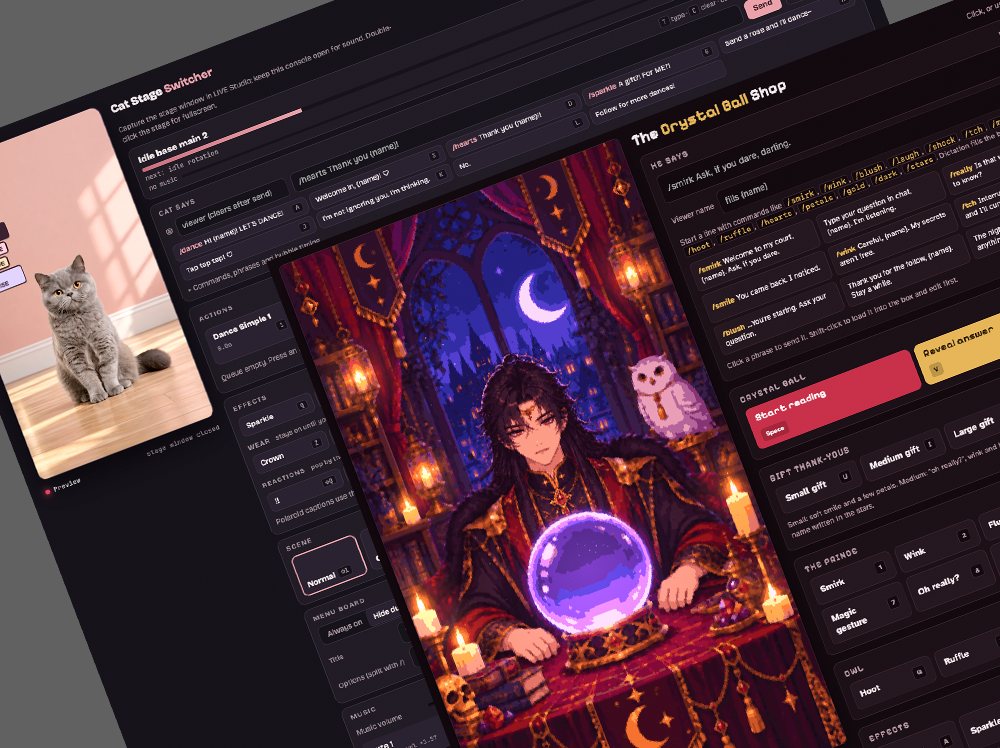
Case study · Product design
CoverRescue.
Two AI-assisted tools that turn cover-design expertise into feedback authors can act on.
- Role
- Product concept, UX, visual design, evaluation framework, prompts, testing
- Built with
- Google AI Studio
- Format
- Two web apps: Audit and Blueprint
- Status
- Working prototypes
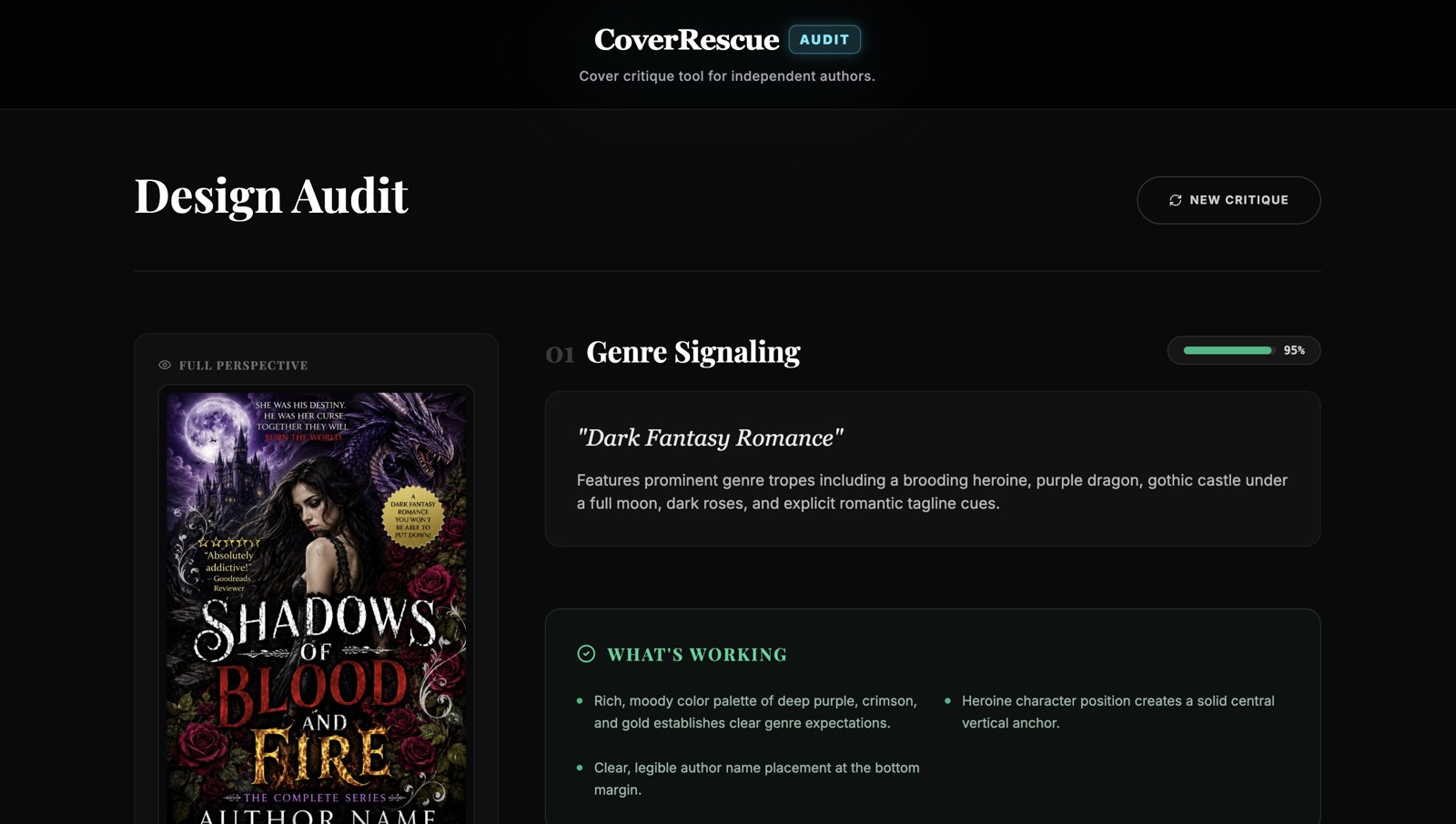
The point
Turn my cover-design judgment into a repeatable process, so authors get feedback they can act on instead of “something feels off”.
Problem
Cover feedback is often subjective and hard to act on. An author may know a cover feels wrong without knowing whether the problem is genre signalling, typography, composition, thumbnail readability or the concept itself.
The same problem shows up earlier. A designer can start generating images before deciding what the cover needs to say, which leads to scattered ideas and repeated revisions.
Two apps
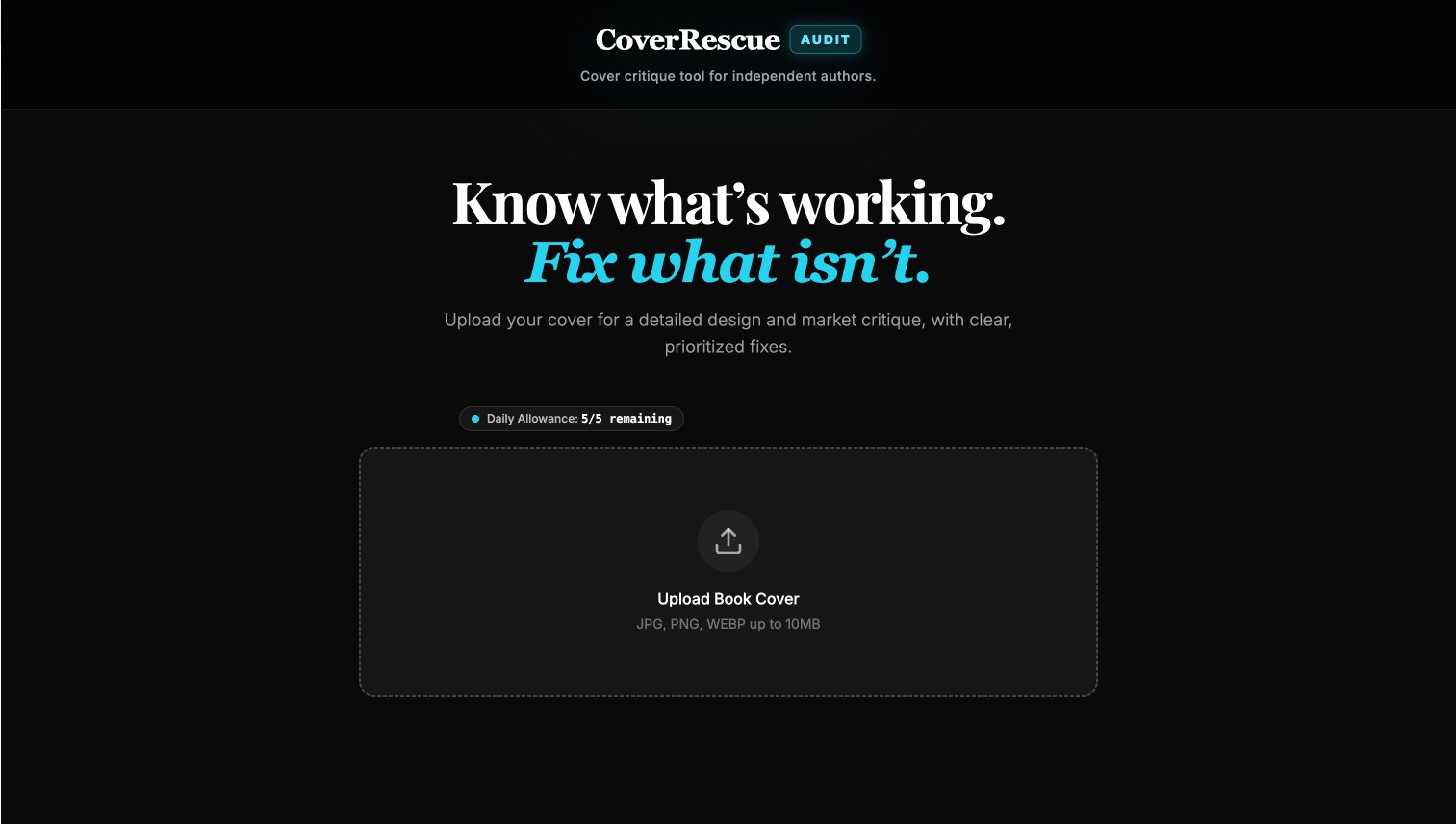
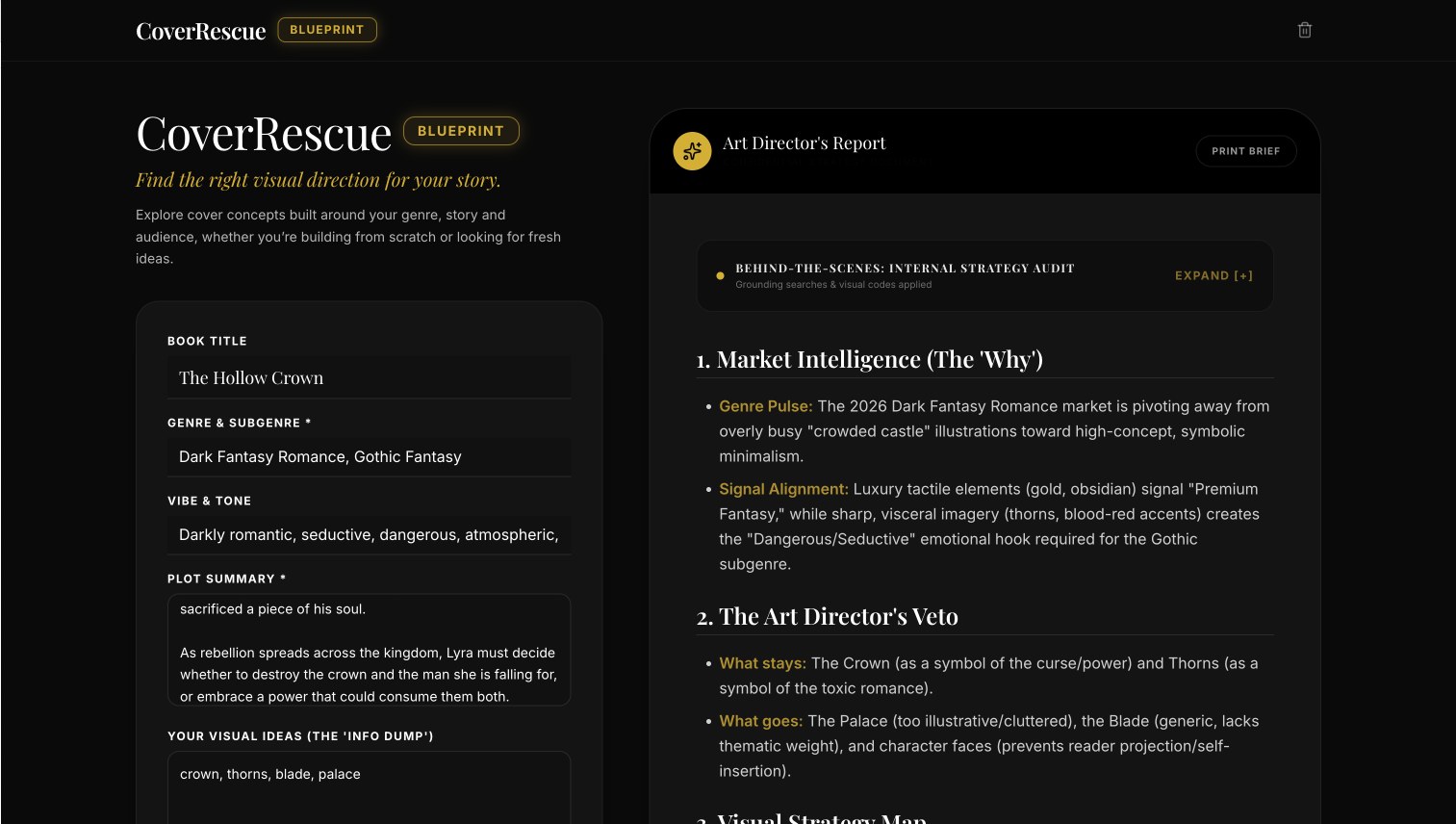
Two problems, so two tools.
How it works
Guided questions in. A ranked report out.
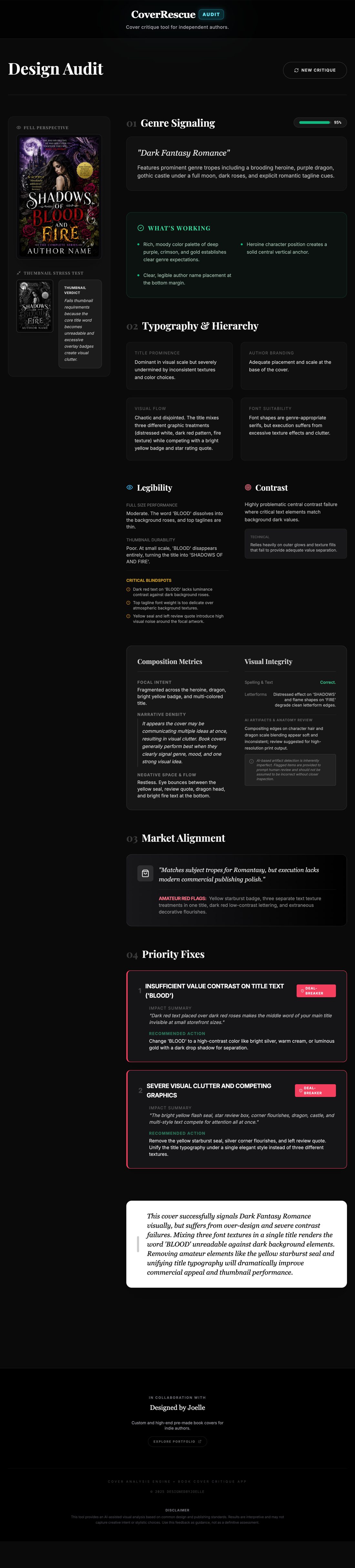
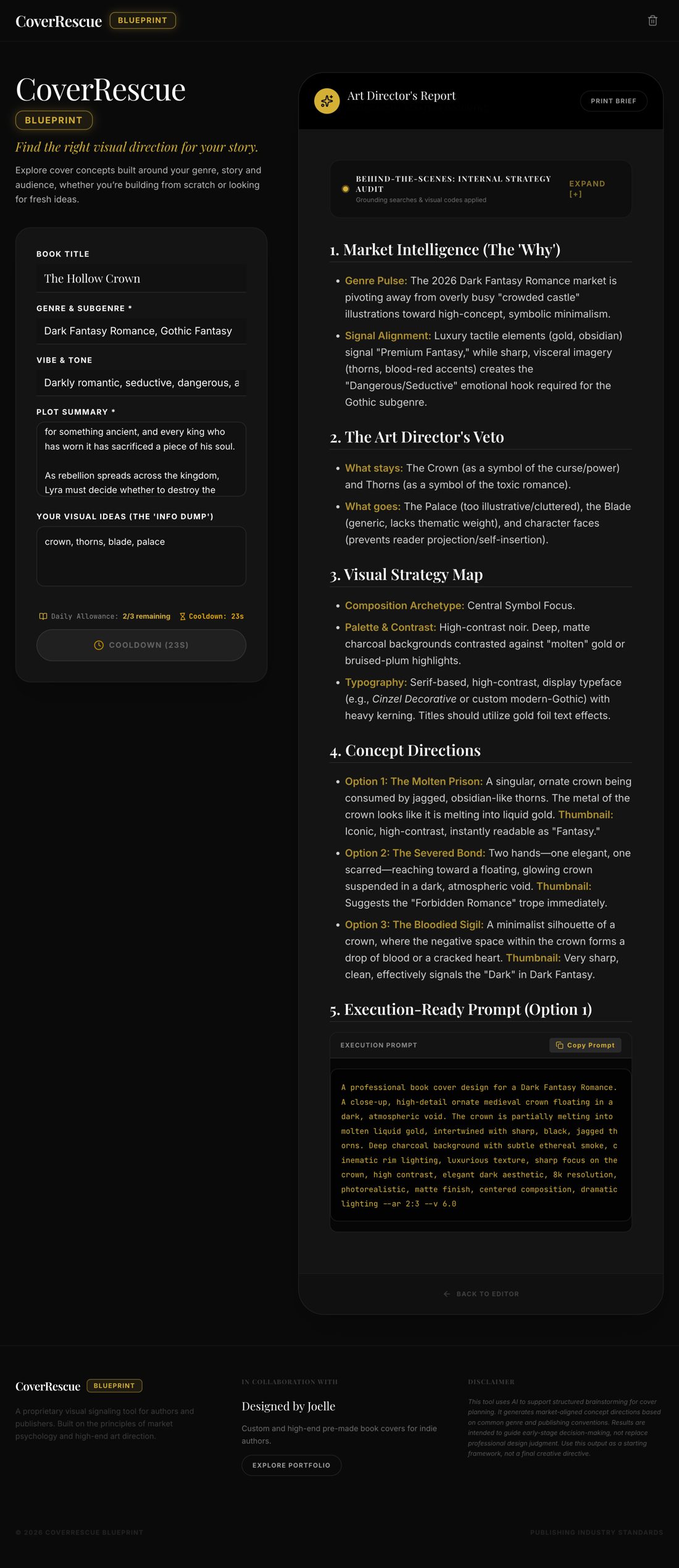
Both apps use guided inputs and fixed report structures instead of an open chat. I defined what the system needs to know, how each factor is judged, and how the report moves from broad analysis to specific action.

Full reports
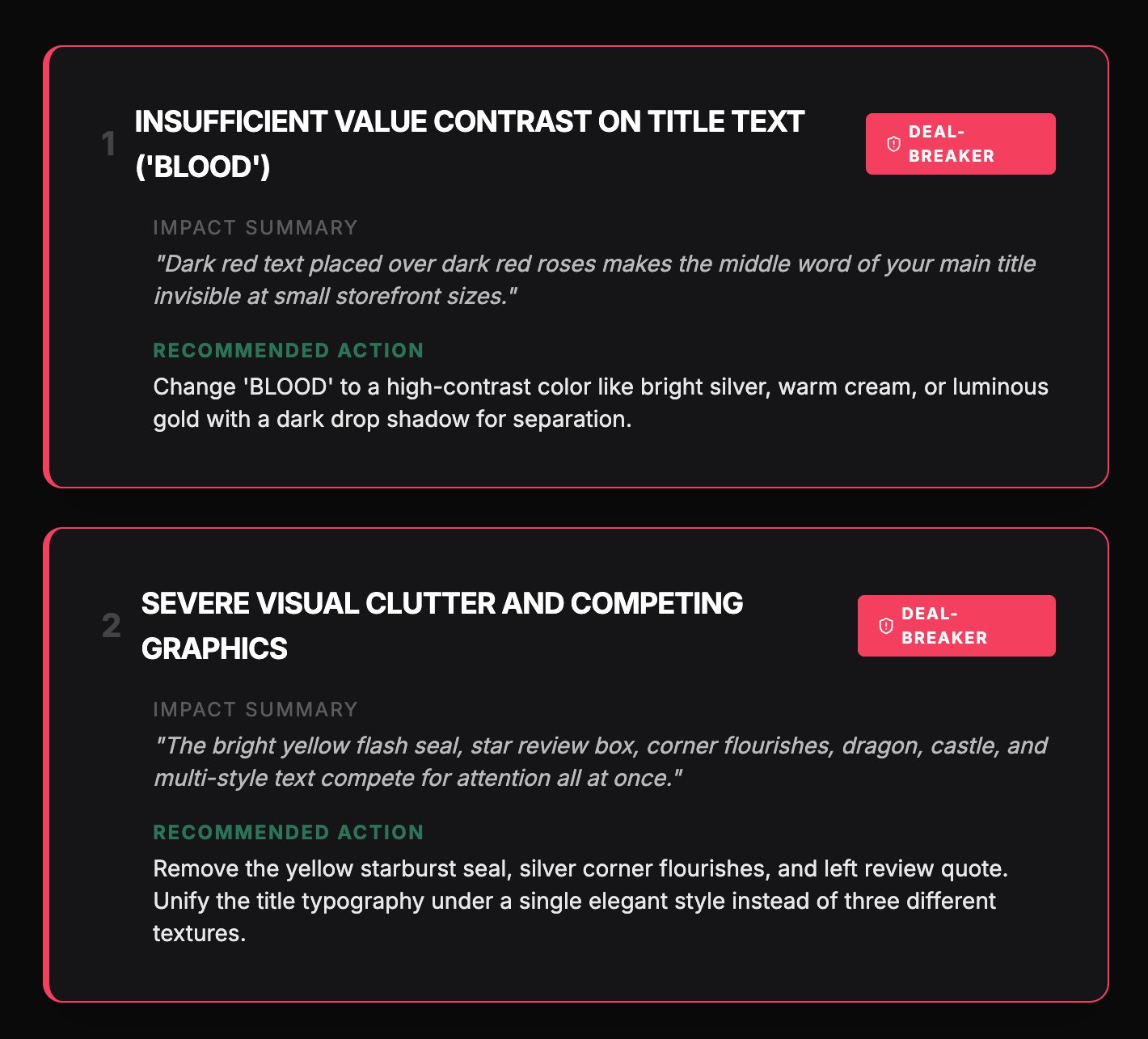
Audit covers genre signalling, typography, legibility, contrast, composition, market fit and priority fixes. Blueprint moves from market intelligence to a visual strategy, three concepts and a ready-to-use image prompt. Scroll inside each to read.
Design decisions
Judge at thumbnail size.
That is where most readers first see a cover.
Keep strengths separate from problems.
So the parts of a cover that work don’t get thrown out with the rest.
Rank fixes by impact.
A small refinement shouldn’t carry the same weight as a problem that hurts genre recognition.
Three different directions.
Blueprint gives distinct concepts from one strategy, not minor variations.
Show the reasoning.
Authors can judge whether a recommendation fits their book. The final call stays with them.
Outcome
Two working prototypes that turn a specialist process into repeatable workflows: diagnose the cover that exists, or define the cover that needs to be made.
I tested them repeatedly with sample covers and adjusted the instructions wherever the output got vague, repetitive or badly prioritized. AI wrote the code. I directed the structure, interface, logic and output.